The recruitment of Brighton & Hove Albion has been exceptional in recent years, with their ability to sell and acquire adequately being much lauded by many football fans. Behind their transformative success as a football club has been their owner, Tony Bloom. The data-led approach has been the competitive edge for a club solely focused on development, being able to compete in a division like the Premier League.
In the summer, Brighton lost a couple of ley members in their squad; Neal Maupay, Marc Cucurella and Yves Bissouma all left to respective Premier League clubs — Brighton raking in £103 million. They were also raided for their manager in September; Graham Potter, his backroom staff, and Paul Winstanley, their Head of Recruitment, departed to join Chelsea.
But in typical Brighton fashion, they had a replacement plan for both situations. With Yves Bissouma leaving for Tottenham Hotspur — a pivotal man to Brighton’s success — Moisés Caicedo was ready to fill the void. Similarly, when Potter left for West London, Brighton was quick to secure the services of Roberto De Zerbi.
As we head into February, the Seagulls are soaring high in the Premier League, sitting in sixth in the Premier League, having just knocked holders Liverpool out of the FA Cup to progress into the fifth round. And that Liverpool game in particular, like much of this season, was the latest display of Japanese sensation, Kaoru Mitoma.
Mitoma, 25, has been an instant fan favourite on the South coast but has gained an even larger fan base, from his clear deep understanding of the game, from the most avid football fans. The Japanese wrote a thesis on the effectiveness of dribbling when he was at the University of Tsukuba. It’s quite a unique story, a student who gradually became a master of the skill he looked to preach.
A story that has been widely appreciated across social media.
Mitoma’s remarkable qualities as a thinker and player of the ‘beautiful game’ were evident back then. He was a player offered a professional contract with the first team of Kawasaki Frontale, his boyhood club, but he turned it down to pursue his academic studies.
A choice that would be greeted with a great amount of shock in Europe and the American area of the world. In Japan, it is an expectation. Education places a high priority in Japan, and Kawasaki Frontale understood and was patient enough to wait for Mitoma to join in 2020 — when his studies finished.
Fast forward to the present day, his decision has served him well. Brighton was quickly alerted about his progression in the J1 League, and in August 2021, they acted upon their interest — £3 million was enough to get a deal done, and he was immediately loaned out to the Belgian side Royale Union Saint-Gilloise — a feeder club of Brighton.
Once again, Mitoma was excelling, this time in Belgium. Brighton was eager to look closer at their unearthed gem, but the loan could not be terminated mid-season, so Brighton would have to bide their time.
Mitoma has often shown in his career that he takes one obstacle at a time. This season, he had the biggest obstacle in his career to face — adapting to the biggest league in the world — he has flourished so far.
His confidence in his abilities has grown under De Zerbi’s guidance. He didn’t spend much time under Potter, but the former and his controlled chaos system have taken him to a new level. This current Brihgton system allows Kaoru Mitoma the isolation he craves against his opposite number and has caused menace to many Premier League right-backs up and down the country.
When watching Mitoma, the eyes tell a story, and the numbers justify it.
This season, his underlying numbers for the Seagulls have been awe-inspiring for his first campaign in the English top flight. Averaging 0.28 xAG/90, ranking him in the top 94th percentile amongst attacking midfielders and wingers in Europe’s top five, according to Fbref, emphasising the creative responsibility he has taken on under De Zerbi.
Despite Brighton ranking 4th in the Premier League for % of possession, they have an aggressive approach to their off-ball duties. Mitoma is pivotal to that approach, averaging 3.24 defensive actions per 90.
The Japanse shone for his nation at the Qatar World Cup, and he was one of the many shining stars for Japan in their promising group stage run to the knockouts.
Mitoma returned from the global tournament with an “I’m him” aura around him. He brushed away any pain from Qatar that would’ve been suffered from the loss on penalties to Croatia, and as you would expect, he was a wanted man — seen as a more attractive figure on and off the pitch.
Brighton has just gone through a January window where they lost one player to the league leaders in Leandro Trossard and were fighting the closing deals to keep one from repeating the same action in Moisés Caicedo.
Brighton & Hove Albion are used to it. They know the value in their players and the interest the “big clubs” show in them time after time. Any potential approach for the Japanese will be met by put-back from Brighton.
The same will go for Mitoma, but as Brighton has shown in the past: they will only sell on their terms.
Kaoru Mitoma’s focus has always been football and improving himself as a footballer. We’ve seen that from when he was writing a thesis back in university to now when he’s coming up against the most illustrious of teams — progression is vital to him, and right now, the comfort of Brighton is where he sees that best, for now.
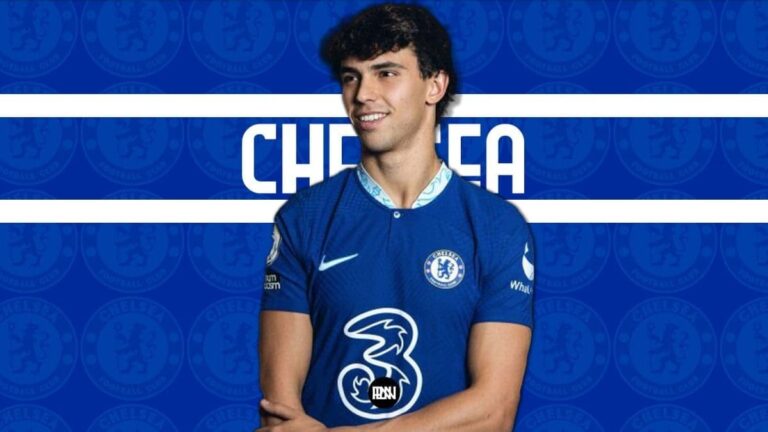
Chelsea has secured the services of Atlético Madrid forward Joao Felix on a loan deal for the rest of the season.
The West London side was able to strike a deal that would bring the Portuguese about 11 million euros (£9.7m).
Félix is another piece to such a complicated attacking puzzle that Graham Potter is still trying to solve.
Félix, 23, had been touted to Arsenal and Manchester United in the early weeks of the transfer window, but the former desire to bring in Mykhailo Mudryk and the latter preference for a more traditional number nine in the form of Wout Weghorst has allowed Todd Boehly and co. to swoop in and secure a deal.
Also, with injuries to Raheem Sterling and Christian Pulisic, with the latter ruled out for a few months, recruiting a forward was highly prioritised.
It’s been no secret about Félix and Atlético manager Diego Simeone’s relationship. In fact, many would say that the move has come to fruition due to the unstable nature of how the two have been torn apart as players and managers.
Despite this, Félix has extended his contract with the club for one more season until June 2027. A decision that comes as a surprise, but many believed the reports that Simeone would depart at the end of the current season. This makes a Félix extension more sensible for the player’s long-term future at the Madrid club.
So with Félix six-month loan confirmation done, what can Chelsea fans expect from the once dubbed Potrugese ‘wonderkid’?
Well, it’s essential to address that, despite the few seasons of underwhelming since his move from Benfica, João Félix has still shown glimpses of the skill, imagination and technical proficiency that bought him to the centre of Spain for €126m.
So for a then-19-year-old to come into an infamous pragmatic set-up by a defence-first manager in Diego Simeone, it would’ve been a confidence-shaker not to have that trust position to play into from the off-set and is even more damming considering the type of profile Félix is as a football and the type of system Simeone has been famed for playing.
As a profile, Félix has generational-defying talent. A skillset that many modern-day forwards could only wish for.
The Portuguese has the poise, skill and grace that has earned him comparisons to his supposed “lookalike” Kaká. He also has the on-ball qualities that make him a suitable option in any position across the frontline.
And his four years at Atlético, it’s clear that Félix has also enhanced his off-ball skills. His defensive actions (tackles and interceptions) have gone up from (0.98) to (1.80), a massive jump in defensive numbers, especially for a player who hasn’t always been the biggest fan of the system he has played in — a credit to the player mentality.
Regarding Chelsea, the major weakness within Graham Potter’s side that then-manger Thomas Tuchel also suffered is the need for a clinical edge.
The chances of Félix, a player who has only registered 10+ goals in a season- his last season at Benfica- is unlikely to solve the goal-scoring problem. But the lack of creative spark offered for the attackers has also been a problem, and the arrival of Félix, who ranks in the 93rd pecentinlce for assists and the 86th percentile for xAG amongst forwards.
An innovative player such as Félix could be the short-term spark needed to limit the attacking burden on Kai Havertz and Mason Mount.
There has been much scepticism about this deal for both sides.
From the player’s point of view, Félix is singing to an underwhelming side that has been struggling in the attacking third. On the other hand, Chelsea is paying a lot for a player who will unlikely not have a long-term future with that.
But despite this, a deal like this is always refreshing to see; Félix has something to prove to the footballing world — a chance to justify his talent just as he did in Qatar, and Chelsea can only benefit from that.
The Belgian Pro League is a league that has embraced its development tag when it comes to bringing in multiple young talents and developing them into players who can command huge fees in the future. In recent years, the likes of Charles De Ketelaere, Jonathan David and Jérémy Doku have gained attention playing for their respective Belgium sides; that attention expanded to the more well-known leagues in Europe and subsequently earned them big moves.
One of the clubs which continues to abide by this policy is Anderlecht.
Anderlecht have produced and have been the hub forseveral future stars on their way to successful global careers. Vincent Kompany, Romelu Lukaku and Youri Tielemans are some names that come to mind when looking back at Les Mauves et Blancs’ prestigious youth line; Zeno Debast has the talent to join that impressive list.
Whether Debast will deserve similar clamour as the aforementioned names, it’s still early to tell, but the early signs are undoubtedly promising. In a reasonably short time, Debast has steadily arisen as one of the more exciting young talents to come out of Belgium football in recent years. He has become a solid cog as he has received more minutes for Anderlecht in the last season and a half.
This season, Debast has adapted comfortably to a back-three system implemented at the club level. It has served him well when adapting quickly to the three-back used at the international set-up throughout the years.
His performance domestically led to him receiving a call-up in September this year as Roberto Martínez look to finalise his squad ahead of the World Cup in November.
And he’s clearly caught the eye of the manager, as he started in both Nation League games vs Wales and Netherlands, respectively, and has ultimately earned a place in Martínez’s squad for the World Cup.
He’s the epitome of the modern defender but also relishes the traditional defensive arts. A defender who enjoys defending and is assertive in the air when called to action, Debast blends a defensive vigour with a delicate poise on the ball. He has an aggressive tendency to be active down the right-hand side, on and off the ball. At 6’2, he commands a certain aura when he lines up in defence.
Zeno Debast 22/23 season heatmap [SofaScore]As seen above in his heatmap, Debast is constantly active down that right-hand side. His position as a right-sided wide centre-back in a three allows him to be an aggressive figure in and out of position. In possession, he is able to create quick combinations with his wing-back, often a one-two and then a sharp through ball down the opposition’s wings. Out of possession, as stated before, the license is more aggressive with his defending, as seen him excel in the wider role as a centre-back, similar to Antonio Rüdiger when he was at Chelsea under Thomas Tuchel; Debast is an effective cog in Anderlecth’s mentality in and out of possession.
He ranks third in his side for accurate passes per ninety (50.6) — the other two ranking higher than him being his centre-back partnerships Wesley Hoedt (62.1) and Hannes Delcroix (53.9), emphasising the importance the defenders have in possession for the side.
Playing, which such aggression does, comes with its negatives, though. Such a play style can leave his area of the defence exposed at times, and for a player who isn’t blessed with the quickness that some other centre-backs are, it can be a costly mistake when the opposition does get into a dangerous position.
An example of Debast weaknesses is shown in the video below; 3.06 to be exact.
Once Mohamed Salah picked up the ball in the centre circle, Trézéguet was on the run. He was able to peel off Zeno Debast too easily, and Debast doesn’t have the pace mentally or physically to the first react to the run and, secondly, catch up to him, and Trézéguet is able to finish it off.
Conclusion
The hype around Zeno Debast is understandable, especially from a Belgium perspective. He possesses a style of play that is very favourable for a modern coach when setting up his defence. As stated before, he has all the tools that epitomize a current-day defender, but he also has the mentality of a traditional defender. His essential mental attributes at a relatively young age are quite impressive, and it’s evident that his technical and physical attributes will only improve as his career develops. It’s likely that his play style, like other young defenders that have garnered the attention of avid football fans, Joško Gvardiol being one, is more suited to a role in a back three than a two — allowing them to be more progressive.
Debast is evidently a promising player. He’s not the complete player, far from it, but his talent means he will be an asset for not just his club but his country, Belgium, as they transition away from the likes of Toby Alderweireld and Jan Vertonghen to a fresher set of players.
The hope in Belgium is that Zeno Debast, alongside Arthur Theate and Wout Faes, can be the trio to faze out the reliable but beginning-to-stale Toby Alderweireld, Jan Vertonghen and even the now-retired Thomas Vermaelen.
This coming World Cup may be the right time for the ‘golden generation’ to step aside and allow the younger guys to take over the mantle.
The odds are more likely that he will move on to a ‘bigger club’ in the future. Whether he stays in the same role will be another question that will only be answered by his development.
Germany are in a phase of uncertainty as a footballing nation. They’re caught between a state of mind of still being a competitive side but also looking to start and build their core around a new generation while easing the expectations — this current squad epitomises this.
The likes of Thomas Müller, Manuel Neuer and İlkay Gündoğan are still crucial parts of Hansi Flick’s side, but it’s clear that their impact in a match is waning. Whereas Armel Bella-Kotchap, Lukas Nmecha and Nico Schlotterbeck are gaining the media clamour that deserves attention.
One player who seems absolutely certain, not just in the squad but the starting XI, is Jamal Musiala.
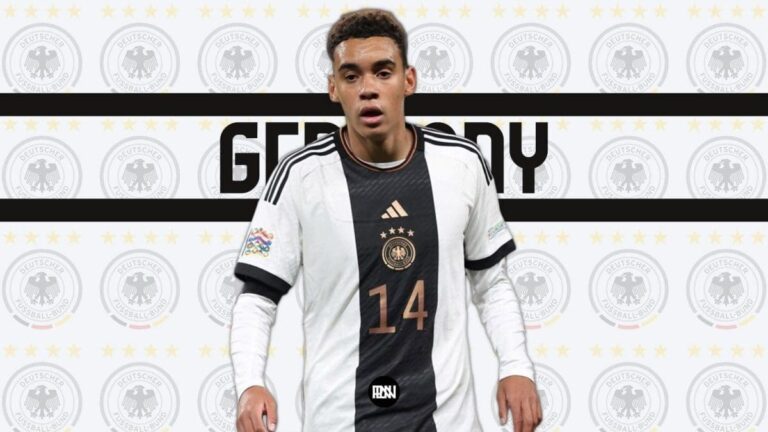
The 19-year-old is a vital cog for his club side, Bayern Munich, and it’s only a matter of time until he establishes such stature at the international level. Musiala has been involved in 10 goal involvements in the Bundesliga this season (six goals and four assists) — making him Bayern’s most productive player domestically.
The former Chelsea graduate’s background is well-documented in England and Germany. Moving to the Bavarians after being poached for a return to his homeland from Chelsea’s academy when he was 16. He was quickly excelling through the youth systems, breaking through to the first team under then-manager Hansi Flick, now-international manager. As stated before, he established himself as a critical part of an ever-dominant Bayern side.
Musiala has exploded into a different player this season under Julian Nagelsmann. He was averaging 8.39 shot-creating actions this season — an improvement on his 4.73 last season. The loss of Robert Lewandowski and the extra offensive responsibility have increased German teenager numbers. One of the most influential aspects of Musiala’s game is his ability to manipulate the ball in every action he does — like a basketball point guard. This skill makes him a valuable asset across the frontline and even deeper in midfield, speaking to his versatility as a piece in offence plans.
Musiala is still relatively raw as a player on and off the pitch. Improvements can still take time to that ‘elite’ level.
Back to Germany, the intent in Jamal Musiala was shown very early from the national team. The tug-of-war battle between the English and German association fighting for his international allegiance. Despite representing England at the youth level, it was clear that his heart was set on Die Mannschaft and a meeting with then-manager Joachim Löw, where the path was shown to him in January 2021.
Musiala became Germany’s youngest debutant at a major international competition after his appearances at Euro 2020 last year.
Jamal Musiala has rewarded the promise shown in him, and going into his first World Cup will only continue. We’ve seen this 19-year-old from Stuggart set extraordinary heights in the last few years, and there’s every chance we witness one of the best young players on the international stage. You sense whatever positive ambitions Germany has at this World Cup, Musiala will be at the centre of it.
Ecuador comes into the Qatar World Cup as one of the few unknowns. Despite the uncertain nature of the team on the pitch, it’s off it where a large part of uncertainty lands.
La Tri was alleged of cheating to get into the 2022 World Cup involving Ecuadorian player Byron Castillo. In particular, there was apprehension around the fact that Castillo had not been born in Ecuador but rather in Colombia, and as a result, he did not qualify for the requirements for Ecuadorian citizenship. During Ecuador’s run to the World Cup qualifying tournament in Qatar, Byron Castillo took part in eight of the country’s matches.
Chile and Peru submitted a unified plea to FIFA after their country secured the fourth and final slot for automatic qualification from South America. This allegation was thrown out by FIFA, but it isn’t ideal preparation for such a young group of players leading into a major international competition.
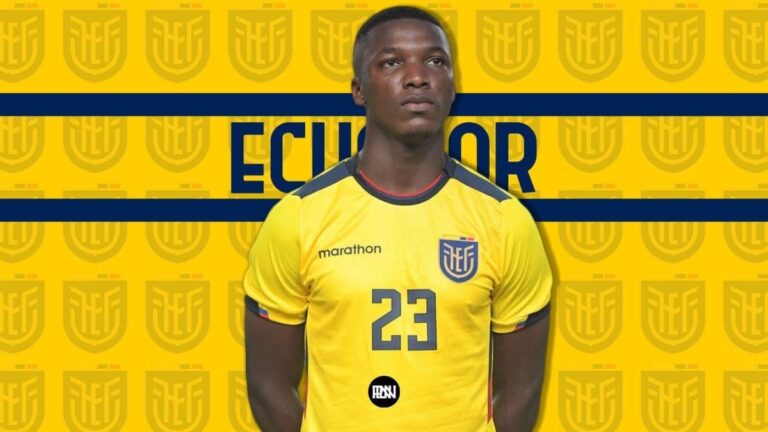
One aspect of this team that isn’t relatively unknown is Moises Caicedo.
The Brighton midfielder embodiments all the good around this current Ecuadorian group of players. Incredibly young gifted players are the core group dubbed a golden generation. It’s no surprise that Ecuador has recently become a hotspot for young talent. Domestic teams in the country are investing more time and money in discovering and developing young talent in order to maximise the country’s most important natural resource, its people, which they will then sell to larger clubs and leagues in order to obtain more revenue for youth development.
It’s evident that Ecuador is growing in stature at club and international levels. The likes of Piero Hincapié, Pervis Estupiñán, Jeremy Sarmiento, and Gonzalo Plata are shining lights within the set-up. Still, Caicedo shins the brightest at the heart of this youthful side.
Moises Caicedo’s status in Ecuador and English football, in general, is growing rapidly. He’s a regular starter at a Premier League side and doesn’t look out of place in matchups against the big sides at 20-year-old. The stage Ecuador will provide, where he is, without a doubt, the best midfielder, will only intensify the hype around him.
As the undisputed midfield leader for Ecuador, Moises Caicedo has an opportunity to showcase his talents to the globe.
Caicedo is still a raw talent, but the skillset is there, and with it, he can be a top, top all-action midfielder. He’s dominant in all thirds of the pitch, with quick combinations on the ball, robust hard tackling and a strong mind at Independiente, which alerted Brighton & Hove Albion into securing his services.
He’s adapted to the demands of the Premier League exceptionally.
Back to Ecuador, Moisés Caicedo was one of these rare players that had established himself as a player on the international level before he did at the top level domestically. This emphasises the belief shown in him at such a young age. The promise shown in him has been quickly rewarded — providing six goal involvements in fifteen qualifying games.
In Ecuador’s group, there is Netherlands, Senegal and the host Qatar. They open the entire campaign against Qatar.
Despite the odds against La Tri, they’ll be hoping to get past the group stages for the first time since 2006; Moises Caicedo will be a vital part.
When Todd Boehly came into the job 103 days ago (at the time of writing), I doubt many would have expected some of the big changes that the American co-owner/interim sporting director would have made. The likes of Petr Čech, Marina Granovskaia, and Bruce Buck being the initial sacrificial lambs for the new era at Stamford Bridge as they all left early on to the new owners’ reign — this left Thomas Tuchel as the figurehead of the new project alongside Boehly.
The German manager worked alongside Boehly in the transfer market at the start of the window, as the two conducted the majority of the business Chelsea did with the approval of each other — Marc Cucurella, Wesley Fofana, Raheem Sterling, and Kalidou Koulibaly all being signings that the two aspired together to complete. But the constant public pursuit of wantaway Manchester United‘s ace Cristiano Ronaldo from Boehly was evident of communication not being as clear despite Tuchel making it very clear on multiple occasions that he didn’t want to entertain any move for the Portuguese forward and the same can be said for the arrival of Pierre-Emerick Aubameyang from Barcelona, with Tuchel making his affection for the former Arsenal striker very clear throughout the latter stages of the window and eventually gaining the support of the board — the end to the transfer window highlighted the frustration from Tuchel in a role he didn’t want to conduct in the first place (he places important value on the coaching aspect of management before anything) and an eye-opener for Boehly that Tuchel isn’t the man he believed could lead the long-term project needed in West London, mixed with inconsistent results, underwhelming performances and the lack of development of underperforming talents, Thomas Tuchel was sacked.
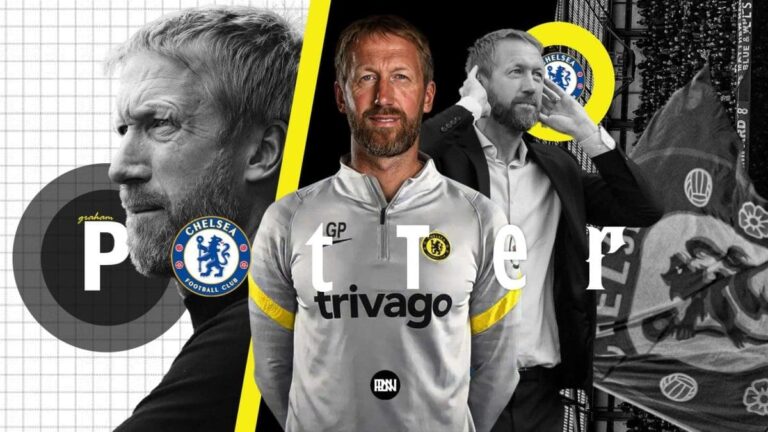
So in comes, Graham Potter – the man that most Premier League fans believe is destined for the top and now he’s got the opportunity to prove it, at an elite club in the domestic league and globally. The most important driving point from Boehly in his brief and direct approach for a new manager was the need for an individual who can progress the current crop of young and experienced players, strike an emotional connection with all parts of the club and bring in a tactical innovative idea of coaching that makes Chelsea a more adaptable club on and off the pitch.
So we’re going to delve into these factors and look into what Graham Potter can bring to Chelsea that Thomas Tuchel couldn’t.
Adapting to different scenarios and situations is the key to where Graham Potter is today. His journey as a coach has not been one of the norm. Starting out as the technical director of the Ghanaian women’s national team and eventually beginning his managerial career in the deep urban area of the Swedish city of Östersund, he was able to hone his basic skills in the encouraging environment of Scandinavian football. Even displaying his initial promise to the English shores when beating Arsenal in the UEFA Europa League knockout stages. This was quickly alerted by clubs around the European scale, none other than Swansea City.
At Swansea, he was able to instill a style of football that was renowned within the club with the likes of Brendan Rodgers, and Potter was able to carry on those traditions and enhance them — establishing the Welsh club as one of the most possession-heavy teams in the country. Once again, Potter was able to take on one of the country’s best teams at the time in Manchester City and went toe-to-toe with them at times, with the City side needing a last-minute goal to secure a narrow 3-2 win.
Pep Guardiola liked what he saw and hailed Potter as “one of the best young coaches in the game with a big future” and his words were listened to by many, as Brighton & Hove Albion were ready to hand Potter the chance to show his talents at the top tier in the English game as he replaced the ever-pragmatic Chris Hughton.
Potter’s time at Brighton is well-known; he showed his one of the most talented coaches in the country and one of the most adaptable in European football but another aspect that was hailed during his time at the South coast was his flexibility within games — ability to start a match with one system and end it with another with no drop in performance.
Graham Potter’s Brighton were one of the most tactically fluid sides in the Premier League. They were able to excel and operate in a number of different formations, most notably a 3-4-2-1/3-5-2 formation dependent on personnel. The formation allows Brighton to defend with a 5-4-1 or 5-2-3 structure, with wing-backs highly important to their attacking play due to their attacking shape of 3-2-5 which funnily enough is quite similar to Thomas Tuchel’s Chelsea side.
Tuchel was often criticised for his lack of flexibility within matches and his often stubbornness in wanting to adapt to his opponent’s system and usually stick with the strengths of his own, despite the evident weaknesses being able to be exploited. This is something that Potter has proven throughout his career that he excels at. Simply, noticing the weaknesses of his opponents and exploiting them while using the strengths of his players without many casualties.
The incomings at Chelsea show significant over-haul in the youth side made by the new ownership with major aspirations of being one of the most successful and youngest sides in Europe down the line. The likes of Carney Chukwuemeka, Gabriel Slonina, Omari Hutchinson, and Cesare Casadei have all been bought in with valuing the long-term success of these “assets” and the club over placing importance on contributing straight away.
This is something that Boehly has stressed he wants to be one of the, if not, the main aim of this project; developing the young talents with a view of them making good on their potential in the future. Tuchel hasn’t always been a manager who valued immediate success over a project but his time at the club has emphasised a manager with limited time and using that time to maximise the success that is pressured by the club. At Dortmund, Tuchel was the man behind the developments of Ousmane Dembélé and Christian Pulisic — seen as two of the brightest young talents in Europe, but his journey after his time at Dortmund has meant that the German has focused on success than development and that is represented over his time at Chelsea, despite the improvements of Mason Mount and Reece James.
Whereas Potter has been praised for his development of players throughout his career and has prioritized the principle of player development over success at times, as he views success as a virtue of the development of the players. This is an aspect of Potter’s character that Boehly will admire in his capture of the Englishman.
There is a clear aim to develop the talents in-house and bring in talents that can compete for the long-term — as seen with the incomings but also the extension of Reece James and the inevitable extension of Mason Mount. This is something Potter will enjoy and take on with confidence as proven by his track record. As seen with the Los Angeles Dodgers, Boehly wants stability and he wants long-term stability in his projects, with the main parts of that project being at the forefront of that. Dave Roberts has been at the LA side for 7 seasons now, developing a set of players and breeding them into the principles that have resonated around the club — the same can be seen with the incoming Graham Potter.
Graham Potter and emotional intelligence and connection
Graham Potter is not all about numbers and systems, though. He places great importance on how emotional intelligence and most importantly emotional connection can get the finest out of a squad as well.
“As much as you need to know about football, you need to know about people as well, that can be the difference. How you can communicate as a team, how you can understand each other, big things in football and it’s not just about the Xs and Os, the numbers, formations, drills, practices, it’s about how you can get that team to function together, motivate individuals with that group to understand their role and others, and come together for a common cause.” – Potter explained to the Coaches’ Voice.
Chelsea has been a club that has been described as “emotionless” on and off the pitch with a connection between the fans and club often missing a ‘middle-man’ to bring the two together. At times, Tuchel was able to do that, especially during the time of the takeover and how he was able to represent the club and often protect the club from media scrutiny — something the fans admire. But his demeanour would often perceive him as “cold-hearted” and “emotionless” despite Tuchel himself would probably disagree, even with his off-field issues.
Potter is a man who values the emotional side of the game as much as he does with the actual footballing side — this allows him to understand and acknowledge situations that will bring the fans and club together as one and finally be the man at Stamford Bridge to do so.
Tuchel’s sacking still leaves a sour taste in many people’s mouths, especially considering the achievements he has accomplished in a short time, but it’s evident that Tuchel and the ownership had different ideas at the end and a new man was needed for their new dawn.
Potter is the man tasked with the responsibility. He has a trajectory to be one of the best young coaches in the game but he needs to prove it and at such a trigger-happy club, whether he will be given the time to prove that or not, time will tell, but if he’s given that patient there’s no doubt that Chelsea are getting a manager with immense talent that could steer the club in the right direction for their long term ambitions.
After a long and drawn-out pursuit, Manchester United have finally signed a midfielder, and no it’s not Frenkie de Jong, despite interest being made very clear from United’s side from the start window, but it is another highly-rated one from Spain; Casemiro.
Casemiro seems to be one of these many footballers who is a victim of his own success — one-third of the one of the greatest midfield we’ve ever seen alongside Luka Modrić and Toni Kroos, you would think the credit he gets would be of the highest but the aforementioned names have taken the shine, and rightly so.
The common perception about the Brazilian is that he is a “water carrier” type of character on and off the pitch and to a certain extent that is true, but this perception is a dent to what he can offer as a ‘general’ for a top side as he has with Real Madrid. In Madrid, Toni Kroos and Luka Modrić. For Brazil, Philippe Coutinho and even in recent years Lucas Paquetá among others. This is now going to change. Manchester United signing Casemiro and making him their ‘statement midfield signing’ allows Casemiro, despite him in his later years, to be the standout in his position.
Casemiro joining Man United feels like a deal that should’ve been done 5, 3, maybe even a year ago, despite how unlikely that would’ve been — signing Casemiro, a world-renowned defensive midfielder, in the same summer you let Paul Pogba go, is representative of Manchester United’s transfer dealings in the last decade. He will have to quickly transition out of a midfield where he was the simple “destroyer” who had two of the best #8s of our generation — stringing the ball around the midfield. Where he will arrive at a side, where his responsibility will be significantly enhanced but also his status within the team will take a massive spike as well.
At Madrid, Karim Benzema, Vinícius Jr., and the aforementioned Toni Kroos and Luka Modrić are all being valued higher within the club and the signing of Aurélien Tchouaméni only reiterates the declining status that Casemiro had at Los Blancos.
And despite the obvious claims that he ‘joined for money’ considering the massive step down from the champions of Europe to a massively underperforming club as a whole, but there needs to be more weight for Casemiro’s side — as stated the player’s dwindling status at the club was evident and an opportunity to be the start of an Old Trafford midfield overhaul would have appealed to him just like it did to this former Real Madrid teammate Raphaël Varane.
Casemiro is the epitome of the classic defensive midfielder — he’s got the athletic stature and capacity, understanding of disrupting opposition moves, attitude to defend, protective screen, anticipating the second ball, aerial duels and ground duels, and stopping transitions — an elite defensive midfielder.
Duel-winning
The prominent aspect that makes Casemiro such an attractive signing is his capability to consistently win his duels; in the air and on the ground. The Brazilian ranks in the top 4 percentile for aerial duels won according to Fbref — emphasising his quality in the air and at just 6’0, he’s amongst the best midfielders in Europe’s big leagues. In fact, he has ranked in the 10 percentile for the last 5 seasons.
But his ability to win duels goes beyond his physicality. Casemiro often uses his anticipation skill to get an advantage in being dominant in duels – and recover – for his team. He’ll regularly sense a ball being unchallenged and he’ll go out of his way to challenge it, showing defensive intensity. Manchester United’s midfield pivot; Scott McTominay and Fred or commonly called “McFred” have often been criticised for their lack of efficiency in their duels despite either respective physical gifts. It is also something that Paul Pogba was berated for during his time at Old Trafford.
UEFA’s Champions League numbers even revealed Casemiro suffered more fouls (18) than he gave way (17) throughout the campaign. This suggests to another of his major talents — knowing his way with referees — master of dark arts you could say. Supporters of his own team and rivals have frequently admired his phenomenal proficiency to evade yellow and red cards. It’s a recognition of his match cleverness and tactful dexterities that he maintains just been sent off twice (both occasions being for double yellow cards) in 521 senior games of dashing into duels for club and country.
Ball Recoveries
Casemiro doesn’t just use his athleticism to win duels, he also unfailingly recovers to prevent dangerous attacking situations that may develop. He ranked 7th in LaLiga for recoveries but played the least 90s out of those players — for per ninety he ranks 2nd amongst those players. He’s able to maintain and perceive control of any attacking situation around him and often uses his physical advantage to eventually win those recoveries — ability to eat up ground through his strides.
Casemiro is one of the best recovers in midfield — ranking in the top 18 percentile for his recoveries rate which is something you’d expect at Real Madrid, a team that often face a lot of transitions from the opposition they play.
So, Manchester United won’t just be getting a player who is combative in the challenge but a player who is athletic enough to aid support for his defensive teammates and the ability to win back the ball and restart potential attacks.
Metronomic figure
One of the glaring issues within the Manchester United midfield is the lack of profiles within the squad to play in the ‘anchor’ role for the team. McTominay and Fred have been used in this role but the pair look more comfortable and effective in a more advanced position with less responsibility to being the first phase midfielder — they look more comfortable as the second phase midfielder.
Despite Casemiro’s obvious limitations in his range of passing or the purpose of his ball-plating abilities — tend to be more reserved, the Brazilian still maintains a compuseure and preciseness about his play that has been needed from a midfielder in the front of United’s defence.
Casemiro’s perceived “destroyer” tag often does his metronome abilities a disservice. As mentioned, he’s a smart player, a player who knows where to receive the ball, what to do when he receives the ball and where to release it to. He chooses the suitable pass and usually executes it well, something which illustrates itself in the stats, too. He ranks in the top 1 percentile for touches in the defensive third, the top 12 percentile for passes attempted and completed, the top 14 percentile for passes received and top 16 percentile for passes under pressure — all numbers which represent a player who is well adept in possession.
Here’s a sequence, at 1:26 in the below video, he plays a one-two passing combination with Modrić and Carvajal before spotting the run developing and playing out wide for Valverde.
How much of his success is down to the great team he played, can he bring success to Manchester United?
We know all about what Casemiro can produce, despite this, there is a big question mark over his head. Casemiro is regarded as one of the best defensive midfielders of his generation, but it’s much easier to look as good as he does when he plays with the players he plays with under the managers he’s played under.
It’s an indisputable talent to sense danger, anticipate where that danger can evolve and intercept and stop that danger from potentially ending up in a goal. Casemiro’s role may appear straightforward, but it’s a by-product of his intelligence, work-rate on and off the pitch and raw ability that has been enhanced. There is a reason why he’s one-third of the most talented midfield trios we’ve ever seen.
The version of Casemiro is due to the team he’s coming into but we can expect a not too dissimilar version of what we saw last season (as simple as that sounds).
Of course at Real Madrid Casemiro has a role and responsibility that he has to stick to and maximise the betterment of others around. But it shouldn’t be lost on football fans, what he can do with less restriction in his role and more of a responsibility to be ‘that guy’ in midfield.
Is he on the decline?
So far, we’ve looked at what he can offer Manchester United now. Whereas a more important query is what lies ahead, and how long he can sustain it for. He may just be 30, but Casemiro is turning 31 in February next year, which is already a risky age to buy him at, considering how physically demanding his role has been in the last few years.
His body has gone through a rigorous career for more than half a decade and his mileage can only go so far — amassing tons of minutes early on in your career can result in a more premature decline, just look at some like Cesc Fàbregas or Bastian Schweinsteiger.
To counter this, Casemiro’s injury record is impeccable, only missing a huge chunk in the 2016/17 season — where he sustained a Fibula shaft fracture — missing 13 games and has only missed 30 games, according to Transfermarket.
Another possible problem is that game is Casemiro’s relatively heavy on his athleticism as mentioned before, particularly his acceleration and power. While he times his off-ball challenges exceptionally well, his capability to get close to high speeds before attackers can adjust the direction and get away from his path.
He may have to acclimate his play style during the later years of his reported lengthy deal if he is to still maximise his abilities for the rest of his career.
This brings us to the final question.
Is Casemiro Worth the Money?
If the stories of a £60 million (€70m), with another £10m (€11m) in add-ons transfer fees and weekly wages surpassing £350,000 are to be acknowledged, Casemiro would cost Manchester United at least £140 million over a four-to-five years period.
Straight away the fee has been a major talking point, is it financially stable to be spending £70 million on a 30-year-old? Well, effectively, a transfer fee of £70 million is the going rate nowadays for somebody as well-regarded and established as Casemiro, but it is an indication of how the demand for players approaching their thirties has subsided and its limited crop of clubs they can go to especially if they’re already at the top level.
In recap, this is a deal that illustrates the immediate need for the player now and a “pay whatever it’s needed to bring him in” type of deal. Despite the long-term aspirations laid out by United and ten Hag, it’s clear that the team needs now and here characters who can contribute high-level performances immediately.
To conclude, in Madrid, we’ve seen a version of Casemiro who’s a ceiling-raiser, with a specified, distinctive role that allows the construction of a renowned midfield that was invincible. Whereas at United, where the intent is to make a reasonable midfield great, expect to see him impose himself from deeper than he ever has and take responsibility in any initial attack that is started.
He isn’t a precise fit for what Ten Hag desires from his #6, and perhaps a definitive resolution for United would’ve been to bring both him and De Jong this summer and have both players partner the midfield and emphasise a true midfield makeover. While that is extremely improbable to occur, the Brazilian’s blend of ball-winning capability, tactical sense, and attention to detail — in addition to his association and alliance at the international level with Fred and previously at the club level with Raphaël Varane and Cristiano Ronaldo — would allow him to be a hugely worthwhile incoming to Old Trafford.
Inevitably, Casemiro’s worth will decline as his years and experience start to catch up with him. Though until then, it’s an intriguing moment to be a Manchester United fan or anyone associated with the club, because they now have a new man in their midfield, one that indicates a start to a midfield revolution.